Introduction
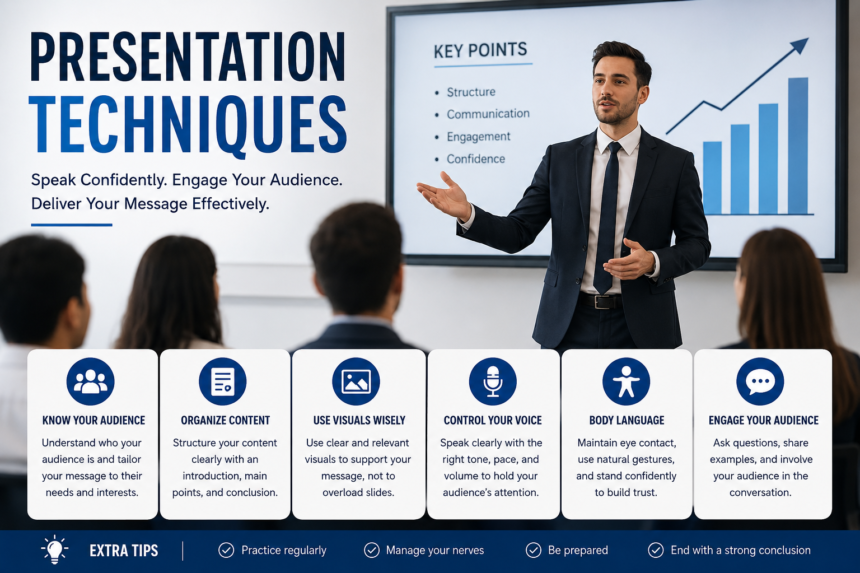
A good presentation is more than simply standing in front of an audience and reading information from slides. Effective presentations combine clear communication, thoughtful organization, confident delivery, and engaging visual materials. Whether the presentation is for school, work, a meeting, or a public event, strong presentation techniques can help the speaker communicate ideas effectively and leave a lasting impression on the audience.
1. Understand Your Audience
One of the most important presentation techniques is understanding the audience. Before preparing the presentation, consider who will be listening, what they already know, and what they expect to learn. A presentation for students may require simpler explanations and examples, while a professional presentation may need more detailed information and industry-specific language.
Knowing the audience also helps determine the appropriate tone, examples, and level of detail. When a presentation is designed around the audience’s needs, people are more likely to remain interested and understand the message.
2. Organize Your Content Clearly
A well-organized presentation is easier to follow. The information should have a logical beginning, middle, and ending. Start by introducing the topic and explaining why it is important. Then present the main points in a clear sequence before finishing with a strong conclusion.
Avoid including too many unrelated ideas. Focusing on a few important points allows the audience to understand and remember the main message. Using headings and transitions can also help connect different sections smoothly.
3. Create Effective Visual Aids
Visual aids such as slides, images, charts, and diagrams can make a presentation more interesting and easier to understand. However, slides should support the speaker rather than replace the speaker.
Avoid filling slides with long paragraphs. Instead, use short phrases, key facts, relevant images, and simple diagrams. Consistent fonts and layouts can make the presentation look professional. Important information should also be easy to read from a distance.
4. Use Clear and Simple Language
Another important technique is communicating ideas in simple language. Complicated words and unnecessary technical terms can make it difficult for the audience to understand the message.
Speakers should explain difficult concepts using familiar words and practical examples. Short and direct sentences can make spoken communication more effective. The goal is not to impress the audience with complicated vocabulary but to make the information understandable.
5. Develop Confident Body Language
Body language plays an important role in communication. Standing upright, maintaining appropriate eye contact, and using natural hand gestures can make a speaker appear more confident.
Avoid constantly looking at the screen or reading directly from notes. Instead, look at different parts of the audience while speaking. Natural movement can also make the presentation feel more energetic, but excessive movement may become distracting.
6. Control Your Voice
The way information is spoken can be just as important as the information itself. A speaker should vary their tone, volume, speed, and pauses to maintain attention.
Speaking too quickly can make it difficult for the audience to follow. Speaking too slowly can reduce energy. Important points can be emphasized by changing tone or using a short pause. Clear pronunciation and appropriate volume also help ensure that everyone can hear the presentation.
7. Practice Before Presenting
Practice is one of the most effective ways to improve presentation skills. Rehearsing allows speakers to become familiar with their material and identify sections that need improvement.
Practice can also help with timing. A speaker should know approximately how long the presentation will take and avoid rushing through the final sections. Practicing in front of a friend, family member, or even a mirror can provide useful feedback and increase confidence.
8. Engage the Audience
An effective presentation should feel like communication rather than a one-way speech. Speakers can engage the audience by asking questions, sharing examples, telling short relevant stories, or inviting people to think about a problem.
Questions can be particularly useful because they encourage listeners to participate mentally. Real-life examples can also make abstract ideas easier to understand and remember.
9. Manage Presentation Anxiety
Many people feel nervous before speaking in front of others. Preparation can reduce some of this anxiety. Knowing the material well, practicing several times, and organizing notes properly can make the speaker feel more prepared.
Taking a few slow breaths before beginning can also help the speaker remain calm. It is important to remember that small mistakes are normal. Instead of stopping completely after a mistake, the speaker can simply correct it and continue.
10. End With a Strong Conclusion
The conclusion is the final opportunity to reinforce the main message. A good ending should briefly summarize the key points and remind the audience why the topic matters.
Instead of simply saying that the presentation is finished, the speaker can end with an important idea, recommendation, question, or memorable statement. A strong conclusion helps the audience leave with a clear understanding of the subject.
Conclusion
- Effective presentation techniques involve much more than creating attractive slides. Understanding the audience, organizing information, using clear language, practicing delivery, maintaining confident body language, controlling the voice, and engaging listeners are all important skills. Visual aids should support the message, while preparation helps reduce nervousness and improve confidence.
With regular practice and thoughtful preparation, anyone can become a more effective presenter. The best presentations are clear, purposeful, engaging, and focused on helping the audience understand and remember the main message.