Introduction
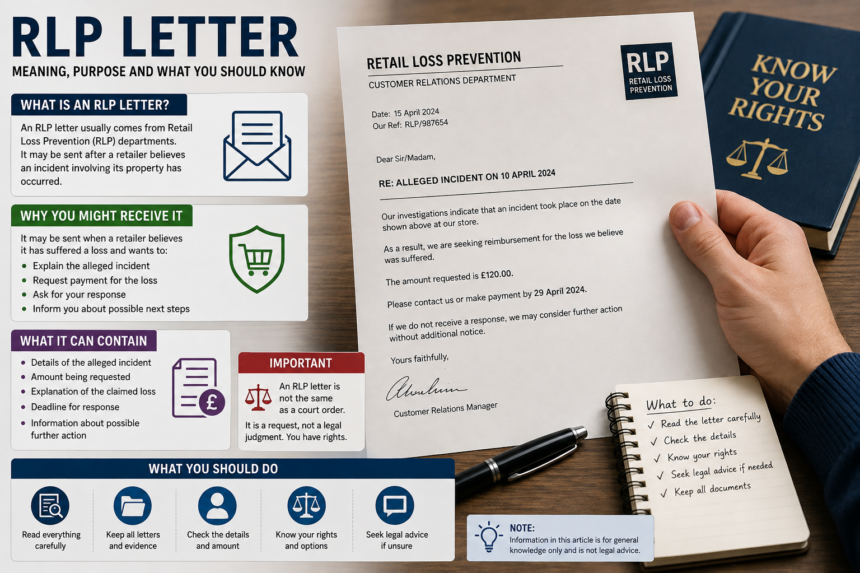
An RLP letter is a term commonly used in the United Kingdom in connection with Retail Loss Prevention (RLP) and retail-related incidents. People may receive such a letter after a retailer believes that an incident involving its property has occurred. The letter can cause confusion because it may contain a request for payment, details about an alleged incident, or information about possible further action.
Understanding what an RLP letter means is important because receiving one does not automatically mean that every statement in the letter has been legally established. The exact circumstances, wording, and legal position can vary from case to case.
What Does RLP Mean?
RLP commonly refers to Retail Loss Prevention. In the context of retail incidents, RLP-related correspondence may concern claims made by retailers following an alleged loss.
Online discussions show that people sometimes use the phrase “RLP letter” to describe correspondence received after an incident at a shop. However, RLP can have several meanings in other industries, so the context is important.
Why Might Someone Receive an RLP Letter?
An RLP letter may be sent when a retailer believes that it has suffered a loss and wants to communicate with the person it considers responsible.
The circumstances can vary considerably. A retailer may have information about an incident from its staff, security personnel, or other evidence. The resulting correspondence may explain the retailer’s position and request a response or payment.
It is important to distinguish between an allegation, a demand, and a court judgment. Receiving a letter itself does not mean that a court has already decided the matter.
What Can an RLP Letter Contain?
The exact contents depend on the circumstances, but a letter may include information such as:
- The name of the retailer
- Details of the alleged incident
- The amount being requested
- An explanation of the retailer’s claimed loss
- A deadline for responding
- Contact information
- Information about possible next steps
Some letters may also refer to evidence or previous communications. The recipient should read the document carefully rather than relying only on the title or amount mentioned.
RLP Letter and Payment Requests
One of the most important aspects of an RLP letter can be a request for money. The amount requested may be different from the value of any individual item involved because the retailer may be making a broader claim.
However, whether a particular amount is legally owed depends on the circumstances and applicable law. A demand for payment should therefore not automatically be treated as equivalent to a court order.
People who are unsure about their legal position may wish to obtain independent legal advice before making important decisions.
Is an RLP Letter the Same as a Court Letter?
An RLP letter should not automatically be confused with a court document.
A private letter or demand is different from formal proceedings issued by a court. If a genuine court document is received, it can contain specific information about the case, deadlines, and required responses.
This distinction is important because ignoring formal legal documents can have consequences. Anyone who receives paperwork that appears to come from a court should carefully check what it is and consider obtaining appropriate legal assistance.
Why Should You Read the Letter Carefully?
People can understandably feel worried when they receive unexpected legal or financial correspondence. However, reacting without reading the document carefully can lead to misunderstandings.
A recipient should check the name of the organization sending the letter, the retailer involved, the date of the alleged incident, the amount requested, and any stated deadline.
It is also useful to keep the original letter and any related correspondence. Having an organized record can make it easier to understand what has happened and, where necessary, discuss the matter with a qualified professional.
Understanding Your Rights
Consumer and legal rights depend on the country and circumstances involved. In the United Kingdom, the legal position surrounding private claims can depend on issues such as evidence, liability, the nature of the claimed loss, and whether formal court proceedings have been started.
For this reason, general information found online should not be treated as personalized legal advice.
People should also be careful about relying on anonymous online discussions. For example, online forums contain many personal experiences involving RLP letters, but individual experiences do not necessarily establish what the law requires in every case.
What If the Letter Mentions Court Action?
Some demand letters may mention the possibility of further legal action. This does not necessarily mean that court proceedings have already begun.
The wording of the letter matters. A statement that a retailer may take action is different from receiving formal court proceedings.
If the letter contains a deadline or refers to a specific legal process, it is important to understand exactly what is being requested. Where the situation is unclear or potentially serious, independent legal advice can help explain the person’s options.
Common Questions About RLP Letters
Does receiving an RLP letter mean I have been convicted?
No. A private letter is not the same thing as a criminal conviction or a court judgment.
Is an RLP letter the same as a police letter?
Not necessarily. RLP correspondence is associated with retail loss prevention, while police correspondence comes from law enforcement.
Should an RLP letter be ignored?
There is no universal answer. The correct response depends on the contents of the letter and the circumstances. Ignoring important correspondence can sometimes create additional problems, particularly if formal legal proceedings are involved.
Can an RLP letter contain a payment demand?
Yes. Some correspondence described as RLP letters includes requests for payment connected with an alleged retail loss.
Conclusion
An RLP letter generally refers to correspondence connected with Retail Loss Prevention and an alleged retail loss. Such letters can contain information about an incident, a payment request, deadlines, and possible next steps.
The most important point is that receiving a letter does not automatically mean that a court has established liability. The recipient should carefully examine the document, distinguish between a private demand and formal court proceedings, keep records, and seek appropriate independent legal advice when necessary.
Because individual cases can be very different, there is no single response that applies to every RLP letter. Understanding the wording and legal context is the best starting point for making an informed decision.