Introduction
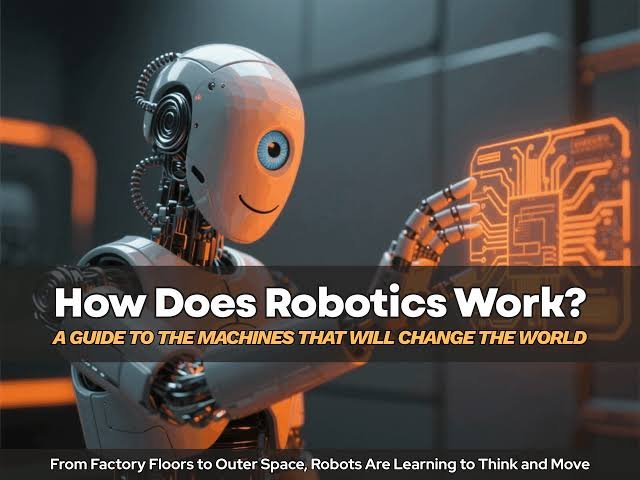
The phrase “Ponas Robotas” translates roughly to “Mr. Robot” in Lithuanian. It is a simple expression, but it can be connected with a much broader topic: the rapidly developing world of robotics, automation, and artificial intelligence. Robots have moved beyond science-fiction stories and are now becoming part of everyday life. They are being used in factories, hospitals, warehouses, research laboratories, agriculture, education, and even entertainment.
The idea represented by Ponas Robotas can therefore be viewed as a friendly way of exploring how machines interact with people and how technology is changing the way tasks are completed.
What Is a Robot?
A robot is a programmable machine designed to perform tasks automatically or semi-automatically. Robots can be built in many different shapes and sizes depending on their purpose. Some are simple machines designed to perform repetitive movements, while others use sensors, cameras, software, and artificial intelligence to respond to their surroundings.
Industrial robots, for example, can repeatedly move components, weld parts, package products, or perform precise assembly tasks. Service robots may help with cleaning, delivery, transportation, or customer assistance.
Modern robots can combine hardware and software to complete increasingly complicated tasks. This development has made robotics one of the most interesting areas of modern technology.
The Role of Artificial Intelligence
Artificial intelligence has become an important part of modern robotics. Traditional robots generally followed predetermined instructions, but AI-powered systems can process information and make decisions based on data.
Computer vision allows robots to identify objects and understand aspects of their environment. Machine-learning systems can help robots improve their performance based on previous information. Natural-language technologies can also make it easier for people to communicate with machines.
However, artificial intelligence does not automatically make every robot intelligent in the human sense. A robot still depends on its hardware, software, sensors, programming, and the quality of the information available to it.
Robots in Everyday Life
Many people interact with robotic technology without thinking of themselves as using robots. Automated vacuum cleaners, warehouse systems, robotic lawn equipment, and certain kitchen appliances demonstrate how automation can enter ordinary homes.
In warehouses, robots can move products and assist workers with sorting and transportation. In hospitals, robotic systems can support certain medical procedures or help transport supplies.
Agriculture is another area where robotics is developing. Automated machines can assist with monitoring crops, identifying weeds, planting, and harvesting. These technologies can potentially improve efficiency while reducing the amount of repetitive manual work required.
Robots in Education
Robotics has also become a popular educational tool. Students can learn programming, engineering, mathematics, electronics, and problem-solving by building and controlling robots.
Educational robotics encourages experimentation. Students can create a machine, test it, identify problems, and modify the design. This practical approach can make technical subjects more engaging.
Robotics competitions and school projects also introduce young people to concepts that are increasingly important in modern technology industries.
Humanoid Robots
Humanoid robots are designed with human-like characteristics, such as two arms, two legs, or a head-like structure. Their purpose is often to operate in environments designed for humans.
Researchers are developing humanoid systems that can walk, manipulate objects, communicate, and perform physical tasks. The long-term goal is not necessarily to make machines identical to humans but to create robots capable of functioning effectively in human environments.
The concept of “Ponas Robotas” fits naturally with this idea because giving a robot a human-style name can make advanced technology feel more familiar and approachable.
Benefits of Robotics
Robotics can provide several important benefits. Machines can perform repetitive tasks consistently and can operate in environments that may be dangerous for people.
For example, robots can be used in areas involving extreme temperatures, hazardous materials, heavy machinery, or difficult-to-reach locations. They can also perform highly precise movements in manufacturing and research.
Automation can improve productivity and help businesses complete certain tasks more efficiently. In some situations, robots can also support workers by taking over repetitive activities and allowing people to focus on more complex responsibilities.
Challenges and Concerns
Despite their benefits, robots also create challenges. One major concern is employment. As automation becomes more capable, some repetitive jobs may change or disappear, while new jobs may emerge in robotics, programming, maintenance, engineering, and system management.
Safety is another important issue. Robots working around humans must be carefully designed and tested to prevent accidents. AI-powered machines also require responsible development because mistakes in software or sensor interpretation can produce unexpected results.
Privacy can become important when robots use cameras, microphones, or other sensors. Developers and organizations need to consider how information is collected, stored, and used.
The Future of Robotics
The future of robotics is likely to involve greater cooperation between humans and machines. Instead of replacing every human worker, many robots may function as assistants that handle specific tasks.
AI development could make robots more adaptable and easier to control. Improved batteries, sensors, processors, and mechanical systems may also allow robots to operate for longer periods and perform more complicated tasks.
At the same time, responsible development will remain essential. Engineers, governments, businesses, and researchers will need to consider safety, privacy, employment, and ethical questions as robotics technology advances.
Conclusion
Ponas Robotas, or “Mr. Robot,” provides an approachable way to think about the fascinating world of robotics. From industrial machines and warehouse automation to educational robots and humanoid systems, robots are becoming increasingly connected to modern life.
The combination of robotics and artificial intelligence is opening new possibilities while also creating important questions about safety, employment, privacy, and responsibility. The future will likely not be defined simply by robots replacing people, but by humans and machines finding better ways to work together.
As technology continues to advance, the friendly idea behind Ponas Robotas can represent a larger conversation about innovation and the role machines may play in tomorrow’s world.